

What is the short answer?
There is no universal safe snow-depth limit for Pennsylvania roofs. Wet snow, ice, drifting, roof design, and the structure’s condition affect the load. For a capacity question, consult a qualified structural engineer or local building official. If you suspect structural distress or imminent collapse, leave safely and call emergency services.
What are the key takeaways?
- Do not use one snow-depth limit for every roof.
- Do not infer capacity from a photograph or a neighbor’s home.
- Keep clear of suspected structural hazards.
- Direct capacity questions to a qualified structural professional.
What information should you gather for a capacity question?
- Property location and available building plans or addition records.
- Dates of recent storms and whether rain or ice followed snow.
- Uneven accumulation visible from a safe location.
- Any new sagging, unusual noises, or changes in door or window operation.
Share these observations with the structural professional; do not climb up to measure snow or use this list to calculate a safe load.
How do different snow conditions affect the assessment?
| Condition | Why it matters | Homeowner action |
|---|---|---|
| Wet or dense snow | Depth alone does not describe weight | Report conditions without calculating roof capacity. |
| Drifted snow | Accumulation may be uneven | Describe visible concentrated areas from safety. |
| Repeated storms or rain on snow | The latest snowfall is not the entire load | Share the weather sequence. |
| Possible structural distress | An immediate safety concern may exist | Leave safely and seek emergency or structural help. |
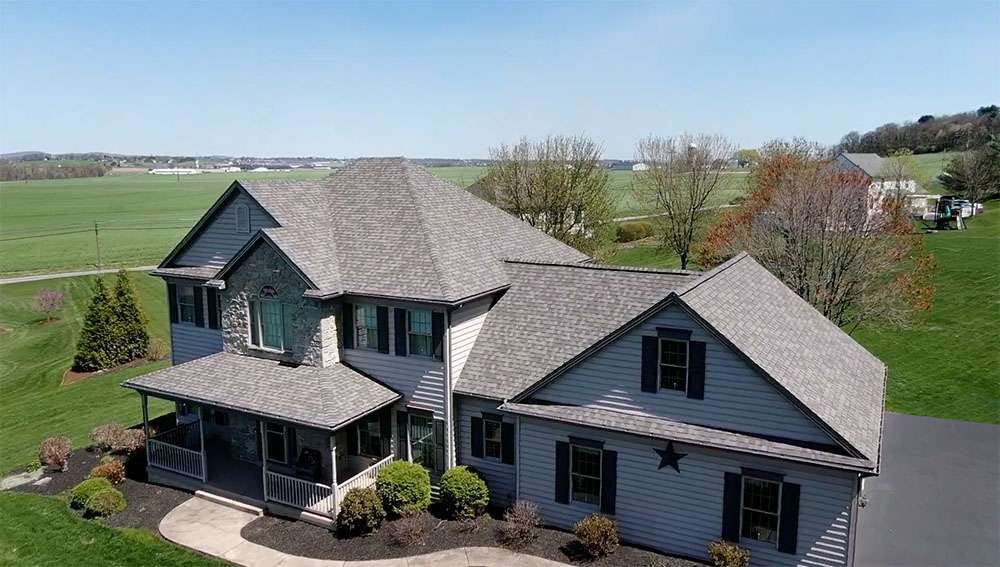
Does previous ice-dam damage establish a safe snow load?
Roof condition matters, but previous ice-dam damage does not establish how much snow a roof can carry. Tell a qualified evaluator about known winter damage or past repairs. Safe load decisions still depend on the structure, snow weight, and site conditions; an ice dam or a photo cannot supply a safe depth limit.
Greenawalt Roofing uses CertainTeed roofing products and holds the CertainTeed ShingleMaster™ PREMIER credential, listed by CertainTeed since 2017.
Last revised: October 5, 2026
Sources: FEMA’s Snow Load Safety Guide
Why can’t snow depth alone establish roof safety?
FEMA’s Snow Load Safety Guide explains that snow conditions vary and that roof loading depends on characteristics of the building. Snow on the ground may also differ from what has accumulated on the roof.
That makes a social-media rule such as “every roof is safe up to this many inches” unsuitable for deciding what to do at your home.
You can report the weather and visible accumulation without claiming to know its weight or the structure’s capacity.
Why should you mention the type and pattern of accumulation?
FEMA discusses snow density, ice, rain on snow, and uneven accumulation as relevant factors. A roof may have drifting or other concentrated areas rather than an even layer.
Describe what you can safely observe.
- Is there a noticeably deeper area?
- Has more than one storm occurred without the earlier accumulation clearing?
- Has rain followed the snow?
Those details can help a qualified professional understand your concern. They do not turn the observation into a reliable homeowner calculation.
Can roof shape or recent work settle the question?
A steep roof, a newer roof covering, or a neighbor’s experience does not by itself establish the safety of your structure. If capacity is the question, the assessment needs to address the structure.
Keep available building plans, records of additions, and relevant project documentation. Ask which information a structural professional needs.
Do not assume that replacing shingles changed the roof’s load-bearing capacity. Describe the actual work rather than infer what it accomplished.
What changes should prompt immediate caution?
FEMA’s Snow Load Safety Guide discusses signs of possible structural distress, including unusual noises, visible sagging, and doors or windows that can no longer open or close normally.
If you suspect structural movement or an immediate collapse hazard, leave the affected building or area safely and call emergency services from a safe location. Do not enter the attic or climb onto the roof to confirm it.
These observations need qualified assessment. This article cannot provide an all-clear based on the absence of a particular warning sign.
Who should answer a roof-capacity question?
A qualified structural engineer or the appropriate local building official is the right route when you need to establish capacity or investigate structural safety.
A roofing contractor may help assess roof-covering or exterior concerns, but a routine exterior review should not be treated as an engineering assessment.
When calling, state the question plainly: “We are concerned about the load on this roof,” rather than asking only whether the shingles look normal.
What should you avoid doing yourself?
Do not walk onto a snowy or icy roof to measure accumulation. Do not test an area by adding weight, removing materials, or moving snow into another part of the roof.
Ask about removal only after the need and approach have been assessed. The crew’s safety and the building’s condition both matter.
If someone proposes work, ask what qualifications and methods are appropriate for the concern. Do not rely on an improvised removal plan.
Roofing services can address roof-covering concerns, but a question about structural snow-load capacity requires a qualified structural professional. Ask for the appropriate referral.
How can you prepare before another storm?
Keep useful property records together and identify whom you would contact for exterior damage versus a structural concern.
Note previous problem areas and share any documented assessment. If a professional provides a monitoring plan, follow that plan and report changes.
For Lancaster, York, Harrisburg, Lebanon, and surrounding Central PA homeowners, preparation means having a clear route to help rather than a universal snow-depth threshold.
How can Greenawalt help?
If the concern involves visible roof damage, drainage, or other exterior changes, Greenawalt can discuss the appropriate evaluation and next steps.
Be explicit about a possible structural issue. Ask whether structural expertise is needed before arranging roofing work.
Request a free roofing or exterior estimate for roofing and exterior project concerns. For suspected immediate structural danger, use emergency and structural-safety channels first.
Why choose Greenawalt for your roofing project?
Greenawalt’s recognition includes Roofing and Exterior Services Company of the Year 2025 from Construction Business Review and Best Roofing Company for Delaware and Chester Counties in 2025 from House & Home. Our CertainTeed ShingleMaster™ PREMIER credential gives homeowners a manufacturer-verified credential to review when choosing a roofing contractor.
What else do homeowners ask?
Can you tell from a photo whether snow is too heavy?
A photograph cannot establish roof capacity or the full loading condition.
Is the roof safe if my neighbor’s roof is fine?
Nearby buildings can have different structures, conditions, and accumulation patterns.
Should I automatically remove snow after every storm?
Ask for guidance appropriate to your property. Removal itself involves hazards and should not be an automatic DIY response.
Why can the same snow depth create different loads?
Wet snow and ice weigh more than the same depth of lighter snow, and drifting can concentrate accumulation. The building’s structure and condition also matter, so a visual depth estimate is not a property-specific capacity assessment.
Who should answer a question about my roof’s snow-load capacity?
A qualified structural professional should assess capacity and structural concerns. A roofing contractor can discuss roof-covering or water-entry issues, but that evaluation is not a substitute for a structural assessment.
Which resources can help with the next step?
What is the next step?
Snow depth alone cannot establish roof safety. Building design, snow density, ice, drifting, and structural condition matter; capacity concerns belong with a qualified structural professional.
Request a no-cost, no-obligation estimate from Greenawalt Roofing. Share your observations and ask what an evaluation can confirm for your home. Confirm the scope of service and any need for a structural or snow-removal specialist.
