

What is flashing and where is it used on your roof?
Flashing helps to prevent water leaks by directing the flow of rain water around openings in the roof. They ensure that instead of leaking into your home, water runs off down the roof and into your gutter system. Flashing is available in a number of different materials.
- Aluminum: Aluminum flashing is durable and cost-friendly. However, it can corrode if it’s in contact with concrete or fiber cement siding.
- Copper: Copper is more difficult to form than aluminum and most costly, but it’s incredibly durable. It’s also compatible with the newer types of wood preservatives used on roofing.
- Galvanized Steel: Although less expensive than other flashing materials, it’s not as durable either.
- Lead: Lead is often used for chimney flashing because of how soft and easy to bend it is. It’s also quite durable.
- PVC: Polyvinyl Chloride is inert and relatively easy to work with.
Flashing Locations on your roof
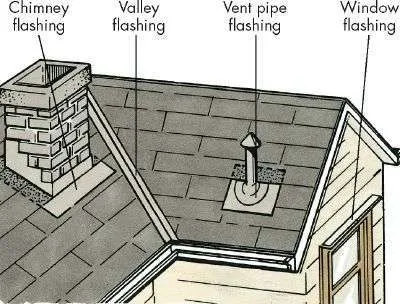
The following are some of the areas on the roof that generally need flashing in order to protect your home against leaks, which can result in extensive water damage.
- Dormer Windows: Dormer windows are especially vulnerable to the elements because of the way they jut out from the roof. Flashing squares are often placed between every row of roofing material. It can also be used as a strip of flashing that runs around the dormer and beneath the roofing material.
- Skylights: When skylights are built into a roof, they are raised with a wood curb to provide enough room for flashing material. If you are replacing your homes roof, you may need to raise the skylight in order to properly install flashing. Some skylights may come with flashing already built in, but these types of skylights may still require additional flashing.
- Chimneys: Flashing strips are typically used for the chimney. These strips are usually made out of metal or PVC flashing and cover the joint between the chimney and the roof. The flashing is overlapped by the edges of the roofing material on one side and cap flashing on the other. The cap flashing is attached to the chimneys mortar joints.
- Vents: Vents are a necessary feature in any roof. If the vent is already installed, then the height of the flashing detail may need to be altered around the vent. If you’re installing a new vent, then you’re going to need to cut a clean hole in the roofing material before installing the flashing. There are two kinds of vents – hood vents and pipe vents. For hood vents, a flashing flange will have to be slipped under the shingles above the vent. For pipe vents, pipe flashing will need to be slid over the pipe once it’s installed.
- Valleys: If you have a sloped roof, then you need to add flashing to the valleys. The valleys, which are the space where two planes of a roof meet, are notorious for developing leaks.
Because flashing is such an important part of your roof, ensuring that it’s properly installed and maintained is incredibly important.
Concerned about your roof’s flashing?
If you’re concerned about the condition of the flashing on your home, don’t wait until leaks cause costly damage. Greenawalt Roofing is here to help! Contact us today to schedule a FREE estimate, and let our experienced team ensure your roof is properly protected.
Local guidance and helpful next steps
For homeowners reading about What is Flashing?, the right next step depends on the property’s existing roofing system, the extent of the concern, and how the surrounding exterior components work together. Central Pennsylvania weather can expose small weaknesses over time, so a recommendation should be based on the actual condition of the property rather than a one-size-fits-all answer.
Explore Greenawalt’s residential roofing services, see what to expect during a Full Exterior Exam, or request a free estimate. You can also review the company’s Central Pennsylvania service areas.
