

Spring roof maintenance should focus on three problems that often appear after a Central Pennsylvania winter: damaged gutters, recurring leaks, and openings where animals can enter. A safe ground-level review can help you spot changes early, but active leaks, loose materials, or suspected structural damage should be evaluated by a qualified roofing professional.
Start with a safe spring roof check
From the ground, look for missing or lifted shingles, sagging gutter sections, loose downspouts, staining below the roofline, and debris collecting in valleys. Inside the home, check the attic and upper-floor ceilings for damp insulation, dark marks, peeling paint, or musty odors. Do not walk on a wet or damaged roof; photos taken from a safe location can help document what changed.
Freeze-thaw cycles, wind, snow, and heavy rain can expose weaknesses that were not obvious in the fall. Homeowners in Lancaster and surrounding Central Pennsylvania communities should also note whether a problem appeared after a specific storm or only during wind-driven rain.
Damaged gutters and drainage problems
Clogged, leaking, or sagging gutters can send water behind fascia boards or toward siding, landscaping, basements, and foundations. Watch the gutters during rainfall from a safe location. Overflowing water, separated seams, loose hangers, and pooling near the home are signs that cleaning, adjustment, repair, or replacement may be needed.
Learn more about Greenawalt’s seamless gutter services and how a properly sized drainage system helps protect the rest of the exterior.
Persistent spring roof leaks
A ceiling stain may not sit directly below the entry point because water can travel along decking, rafters, or insulation. Spring leaks may involve shingles, flashing, vents, valleys, skylights, or ice-related damage near the roof edge. Repeated leaking deserves prompt attention even when the stain looks small.
A professional roof repair evaluation can help identify the source, document the affected area, and explain whether a focused repair is practical or whether broader wear needs to be considered.
Animal activity around the roof

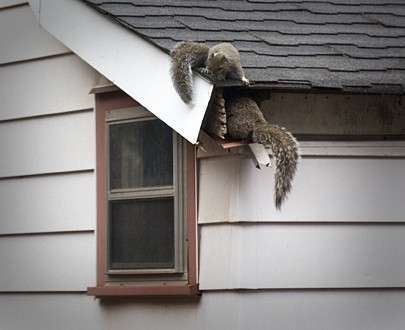

Loose soffit, damaged fascia, open vents, and gaps near the roofline can give birds, squirrels, raccoons, and insects a way into the attic. Listen for movement, look for nesting material or disturbed trim, and contact a wildlife professional when an animal may still be inside. After safe removal, a roofing or exterior contractor can evaluate the entry point and surrounding materials.
When to call a roofing professional
Request an evaluation when water is entering the home, shingles or flashing are visibly displaced, gutters are pulling away, interior stains are growing, or the same repair has failed more than once. Greenawalt Roofing can explain the findings in plain language and help you compare repair and replacement options without pressure.
Greenawalt serves homeowners across its Central Pennsylvania service area. If you are unsure what changed over the winter, request a no-pressure exterior evaluation.
Frequently asked questions
Can I inspect my roof myself?
Limit your review to safe locations on the ground, inside the home, or from a secure window. Avoid climbing onto the roof. A professional can inspect areas that are not safely visible and document the condition.
Does one spring leak mean I need a new roof?
Not necessarily. The right recommendation depends on the leak source, the roof’s age and condition, prior repairs, and whether damage is isolated or widespread.
