

We suggest three excellent color schemes to try below.
Yellow – White – Reddish Brown

This color scheme is inspired by the subtle brown tones on Tudor style homes, but remains versatile with the addition of a bright yellow. Bold hues are best for contemporary homes, while more subtle shades in the same color family would work well in traditional homes. To keep this palette from being too overwhelming, we recommend choosing a neutrally stained wood door and white accents.
Gray – White – Black
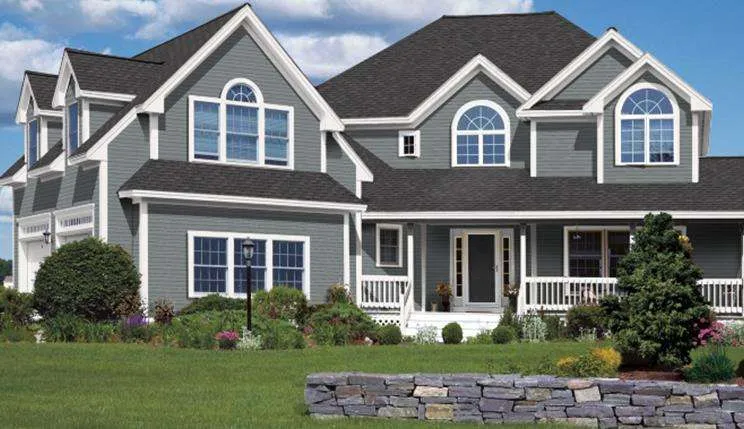
Modern homes can sometimes feel a bit uninviting with their sleek lines and minimalist design. To achieve a warm yet still contemporary vibe, invest in vinyl siding in a light gray shade and use lighter tones to highlight your homes architectural details. White is a great accent color for this aesthetic because they can be both warm and cold depending on the saturation, making them a flexible option.
Peach – Light Brown – Brown
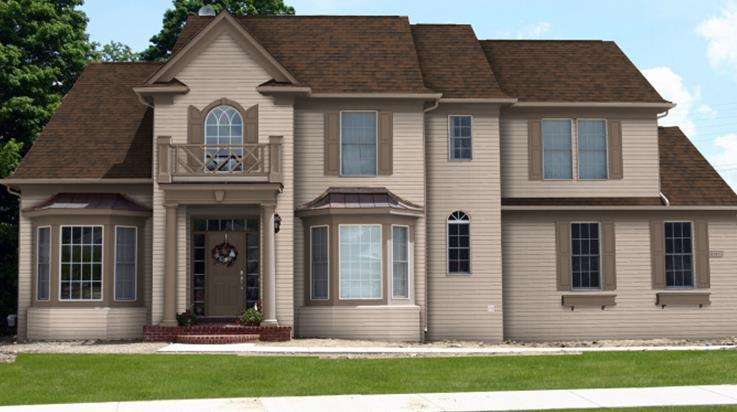
Many traditional homes, like Victorian homes, showcase a myriad of colors in their exterior color palettes. If you’re not a fan of this, you can keep things soothing and simple with warm shades. Use peach, the lightest shade, for the majority of your home, like the siding, and complement it with red-tinted browns and cream.
Greenawalt Roofing Company can provide a professional siding installation for your home.
Call us today at (717) 898 – 6000 for a free estimate on your replacement. We serve Lancaster and the surrounding areas.
What Central Pennsylvania property owners should consider
Great Color Schemes for Your Home is best understood in the context of the whole property, not from one symptom alone. The age of the materials, previous repairs, water-management details, installation methods, and nearby exterior components can all affect what is visible. Central Pennsylvania’s mix of heavy rain, wind, summer heat, falling leaves, freeze-thaw cycles, and winter weather can also make the same concern look different from one home or building to another.
Start with observations that can be made safely. Avoid climbing onto the roof or disturbing damaged materials. Instead, note when the concern appeared, whether it changes during particular weather, and whether it is isolated or occurring in several areas. Photographs taken from a safe location and notes about prior work can help a professional understand the history without relying on memory alone.
Details worth documenting
- changes in the attic or ceilings after rain, wind, or snow
- whether gutters, ventilation, and nearby exterior components affect the concern
- the age and known repair history of the roof
- missing, lifted, cracked, stained, or deteriorated materials
- the condition of flashing at walls, chimneys, valleys, and penetrations
These details do not replace an on-site evaluation, but they make the conversation more useful. They also help separate a maintenance item from a repair need or a larger project. A clear evaluation should explain the observed condition, the likely scope, the surrounding components that were checked, and any assumptions that could affect the recommendation.
Questions to ask before authorizing work
- Are decking, flashing, and ventilation included in the scope?
- Which conditions could change the final price?
- What materials and warranties are proposed?
- How should the roof be monitored after the work?
- Is the concern isolated or part of a broader roof condition?
- What evidence supports repair rather than replacement?
Ask for the proposed work in writing and compare scopes rather than price alone. Materials, labor, disposal, cleanup, ventilation, flashing, permits, warranties, and possible concealed conditions should be easy to identify. If alternatives are available, the practical differences should be explained in plain language so the decision reflects the property’s needs and the owner’s priorities.
Greenawalt Roofing serves homeowners across Central Pennsylvania. Learn about residential roofing services, review what happens during a Full Exterior Exam, browse the company’s service areas, or request a free estimate.
