

Can Tree Branches Really Damage My Roof?
After bad storms and tornadoes, you’ve probably watched the news and seen roofs caved in by toppled trees. But it’s much more common for a single branch to wreak havoc on your home, and you might be surprised how. Branches can be putting your home in danger for more than one reason when they grow too close to your roof.


1. Branches could fall.
Gravity is the law that never changes: if there’s a branch hanging above your roof, it’s going to fall one day. Better to cut it down and control when and where it falls than to pay the price when you least expect it.
Be sure to cut down a branch using all the right safety equipment and precautions. The idea is to prevent property damage, not cause it.
2. Animals can access your roof.
A tree branch is like a one-way ticket from the ground straight onto your roof. From there, critters like squirrels, raccoons, rabbits, and possums can have a field day. Don’t be surprised to wake up to scratching in your attic one morning because a raccoon family invited themselves in.
3. Moisture can accumulate.
Branches that shade your roof or lie on top of it will prevent moisture from evaporating quickly–meaning moisture soaks into your roof. Over time, this moisture causes rot and decay of your roof, which will ultimately lead to leaks and higher energy bills as air escapes.
4. Leaves can clog your gutters.
Gutters exist for one reason: to take water from your roof and send it as far away from your house as possible. That way water doesn’t leak down into your foundation or rot away your siding.
Gutters clogged with leaves will eventually overflow with rainwater, sending water cascading down your siding, where it will leave ugly stains, rot the siding, and slowly cause your foundation to shift and become unstable.
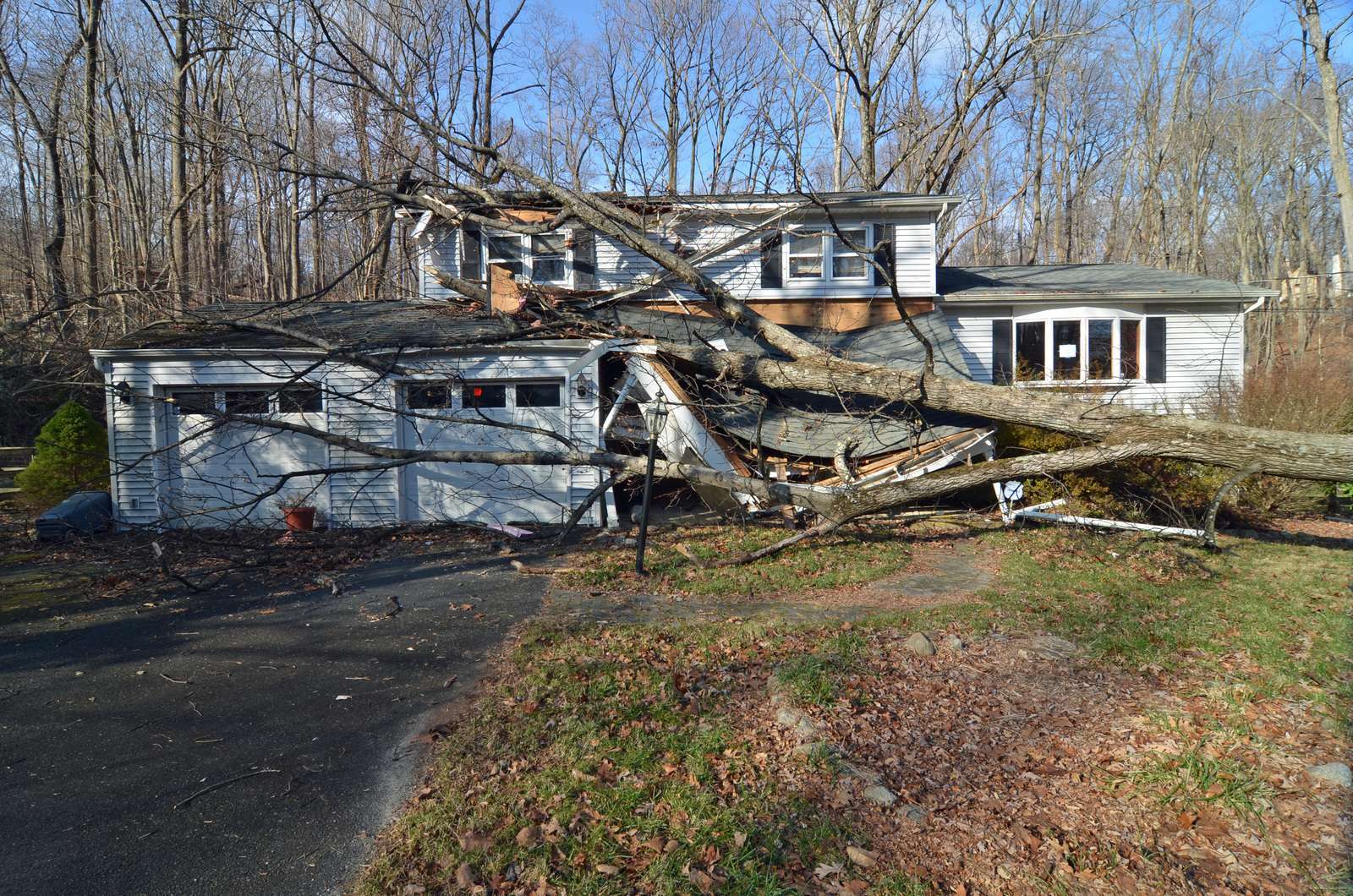
5. Branches can scratch and damage your shingles.
Most shingles nowadays are made of little asphalt granules. These shingles will lose granules gradually over time from rainstorms, sun exposure, and dust. But they can also be scraped off your roof by tree branches. When the wind blows branches across your roof, your shingles get worn down much faster than usual, putting your roof at risk for leaks or shingles that fly off during a storm.
All in all, tree branches near your roof cause nothing but trouble. It’s always best to cut them down before they turn into a real problem, and if you don’t feel comfortable with a saw you can always call a professional to take care of it.
What Central Pennsylvania property owners should consider
Tree Branches VS Your Roof is best understood in the context of the whole property, not from one symptom alone. The age of the materials, previous repairs, water-management details, installation methods, and nearby exterior components can all affect what is visible. Central Pennsylvania’s mix of heavy rain, wind, summer heat, falling leaves, freeze-thaw cycles, and winter weather can also make the same concern look different from one home or building to another.
Start with observations that can be made safely. Avoid climbing onto the roof or disturbing damaged materials. Instead, note when the concern appeared, whether it changes during particular weather, and whether it is isolated or occurring in several areas. Photographs taken from a safe location and notes about prior work can help a professional understand the history without relying on memory alone.
Details worth documenting
- temporary measures already taken to limit further damage
- the date and approximate time of the weather event
- photos taken safely from the ground before temporary work begins
- missing, lifted, dented, cracked, or displaced exterior materials
- interior stains or active water entry that need prompt attention
These details do not replace an on-site evaluation, but they make the conversation more useful. They also help separate a maintenance item from a repair need or a larger project. A clear evaluation should explain the observed condition, the likely scope, the surrounding components that were checked, and any assumptions that could affect the recommendation.
Questions to ask before authorizing work
- What assumptions and exclusions are written into the proposed scope?
- Which conditions appear storm-related and which may be normal wear?
- Does the property need temporary protection before permanent work?
- What documentation should be kept with estimates and photographs?
- Are roofing, siding, gutters, and flashing all included in the evaluation?
- Which repairs are urgent and which can be planned?
Ask for the proposed work in writing and compare scopes rather than price alone. Materials, labor, disposal, cleanup, ventilation, flashing, permits, warranties, and possible concealed conditions should be easy to identify. If alternatives are available, the practical differences should be explained in plain language so the decision reflects the property’s needs and the owner’s priorities.
Greenawalt Roofing serves property owners across Central Pennsylvania. Learn about storm-damage support, review what happens during a Full Exterior Exam, browse the company’s service areas, or request a free estimate.
