

Your roof plays a big role in maintaining the overall integrity of your home, keeping you protected from the elements and helping control your heating and cooling costs. But, like everything else in the world, a roof doesn’t last forever.
A typical roof with asphalt shingles will last anywhere from 15 to 20 years, but most homeowners will squeeze out a few extra before making the investment in a replacement.
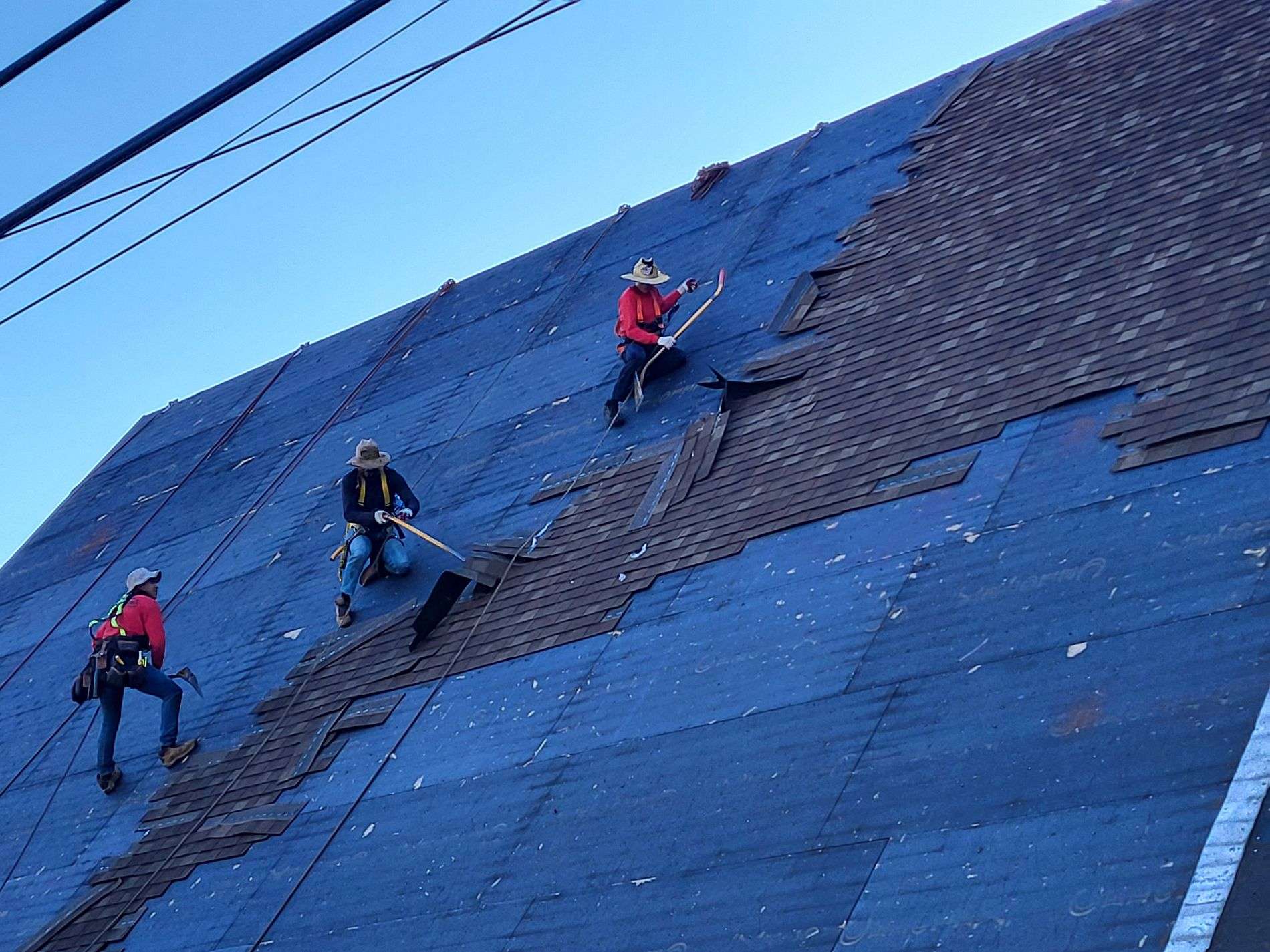
When is the Best time to replace my roof?
So, when is the best time to replace your roof? Well, before you’re in dire need. Being able to plan for a replacement allows you to shop around, budget and eliminate having to make a rash decision out of necessity. So, if you’re at the point of squeezing out those extra years, you might want to think about putting a roof replacement plan together.
In terms of what time of year is the best time to replace your roof, we say April through October. But, we work on roofing projects all year because emergencies often happen.
Why do we say April through October? Well, traditional asphalt shingles need to undergo a thermal sealing process. In Pennsylvania, temperatures and the sun angle in these months makes this process happen much quicker. Also, shingles can become brittle and break in colder temperatures, so the warmer temps make installation go more smoothly.
Can I Replace my Roof in the Winter?
Can you replace a roof in the winter? Absolutely. But we prefer not to replace roofs in weather below 40 degrees Fahrenheit. As mentioned above, the asphalt shingles need to go through a thermal sealing process, and colder weather makes this take much longer. But, sometimes working in temps below 40 degrees is unavoidable. Most shingle manufacturers call for a specialized adhesive to be applied to each shingle in temps below 40, which is something we certainly abide by.
You should be inspecting your home at least once a year to see if any issues are arising. If you notice missing or damaged shingles, mold or mildew growing, or you’ve noticed spots on your walls or ceiling inside your home, you could have a problem roof.
Your home is one of your largest investments and its roof should protect that investment. At Greenawalt Roofing Company, we ensure that protection by using only the highest-quality asphalt shingles and underlayment. Contact Greenawalt Roofing Company today at 717-898-6000 for your FREE estimate
What Central Pennsylvania property owners should consider
When Is the Best Time to Replace My Roof? is best understood in the context of the whole property, not from one symptom alone. The age of the materials, previous repairs, water-management details, installation methods, and nearby exterior components can all affect what is visible. Central Pennsylvania’s mix of heavy rain, wind, summer heat, falling leaves, freeze-thaw cycles, and winter weather can also make the same concern look different from one home or building to another.
Start with observations that can be made safely. Avoid climbing onto the roof or disturbing damaged materials. Instead, note when the concern appeared, whether it changes during particular weather, and whether it is isolated or occurring in several areas. Photographs taken from a safe location and notes about prior work can help a professional understand the history without relying on memory alone.
Details worth documenting
- the age and known repair history of the roof
- missing, lifted, cracked, stained, or deteriorated materials
- the condition of flashing at walls, chimneys, valleys, and penetrations
- changes in the attic or ceilings after rain, wind, or snow
- whether gutters, ventilation, and nearby exterior components affect the concern
These details do not replace an on-site evaluation, but they make the conversation more useful. They also help separate a maintenance item from a repair need or a larger project. A clear evaluation should explain the observed condition, the likely scope, the surrounding components that were checked, and any assumptions that could affect the recommendation.
Questions to ask before authorizing work
- How should the roof be monitored after the work?
- Is the concern isolated or part of a broader roof condition?
- What evidence supports repair rather than replacement?
- Are decking, flashing, and ventilation included in the scope?
- Which conditions could change the final price?
- What materials and warranties are proposed?
Ask for the proposed work in writing and compare scopes rather than price alone. Materials, labor, disposal, cleanup, ventilation, flashing, permits, warranties, and possible concealed conditions should be easy to identify. If alternatives are available, the practical differences should be explained in plain language so the decision reflects the property’s needs and the owner’s priorities.
Greenawalt Roofing serves homeowners across Central Pennsylvania. Learn about residential roofing services, review what happens during a Full Exterior Exam, browse the company’s service areas, or request a free estimate.
